
Your rage against AI depends on which side of the Pacific you're on.
Pope Leo XIV's first encyclical, Magnifica Humanitas, dropped in May 2026 and the Western internet swooned. But the reaction tells us more than the document does. This piece is about what the global response to one papal memo reveals about who gets to be afraid of AI — and who just has to build it.

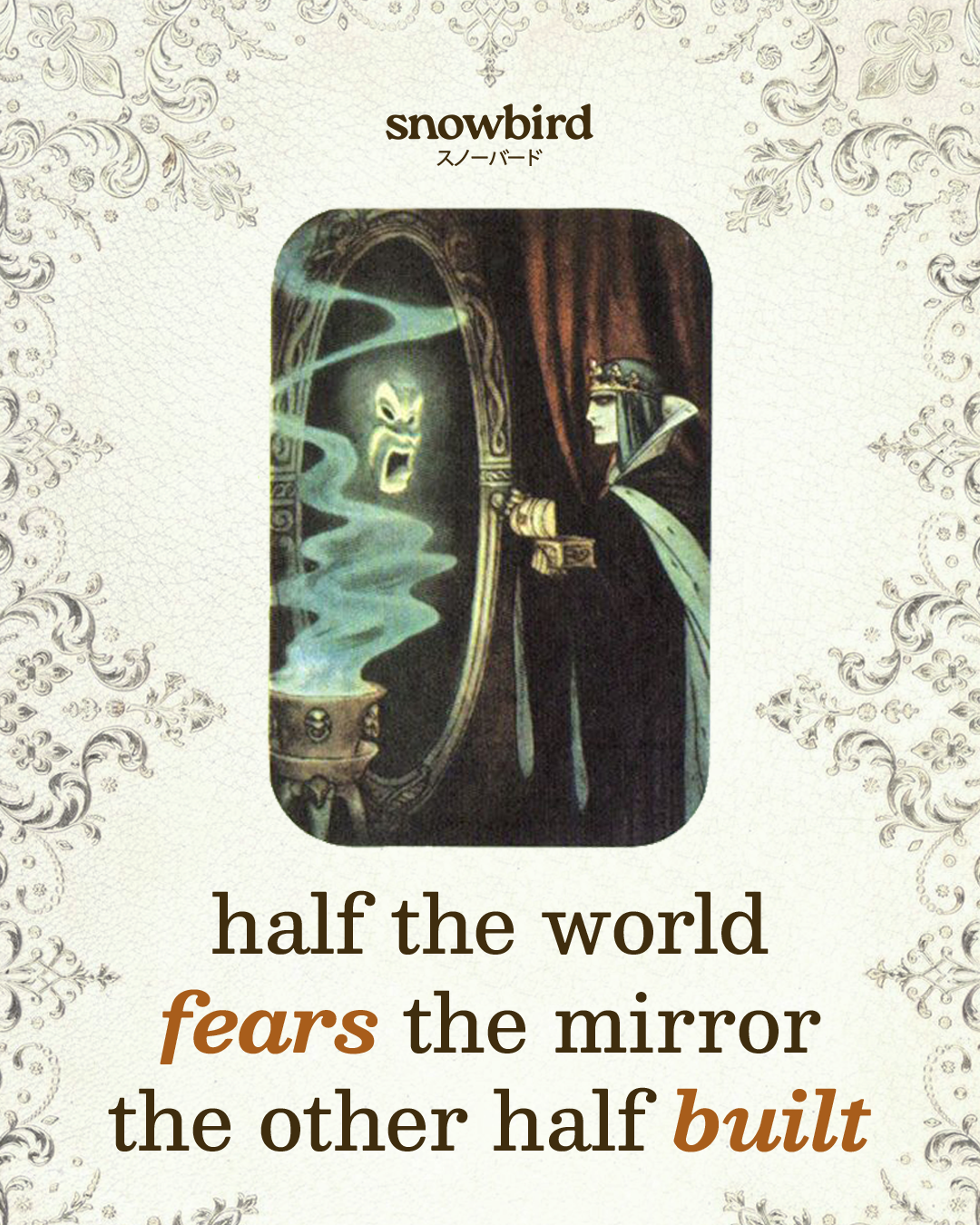
I'm as nauseated as you are with every single headline in my feed being about AI. But the world is being reshaped by stories of AI as much as AI itself. As a student of how culture, tech and business intersect, I pay attention to how we, as a society, are reacting to these stories.
THE DOPE POPE
The cultural reaction that has fascinated me these past few weeks is how much we love the new Pope.
Catholicism, with its declining market share in Europe and the Americas, needs to drive up relevance asap. And that relevance will come from caring about things that affect everyone's lives. In 2026, that's AI. The Vatican has taken a deep interest in the most significant global phenomenon of this decade. If you haven't read about it yet, they published an encyclical (fancy papal way of saying 'memo') called Magnifica Humanitas.
It's a pretty deep exploration of what balance technological progress needs to strike. It goes into labor, truth, democracy, education and a host of other topics. The (western) internet loved it. There is already increasing antipathy towards AI (specifically the widely adopted Gen AI), so this reaction makes sense. Governments are lining up to "not be left behind" in the AI race. Corporations definitely aren't going to be left behind either — they're equally terrified of the consequences of wars as they are salivating over the pipe dream of infinite AI-driven cost savings. People (religious and agnostic) seem to be happy that at least someone is stepping up to the plate to have a counterbalance to Big AI.
As Bloomberg columnist Flavia Krause-Jackson points out, it’s a welcome return to nuance:
“Pope Leo delivered a document of nuance, much needed at a time when single social media posts move markets and shape policy within seconds, and when uncertainty over the plans and motivations of AI leaders is rife.”
I found it hilarious that most thinkfluencing on my feeds about the Pope's 83-page document was done by people using their LLMs to summarize the document. Such is the death of nuance that even reading about nuance can't be done without killing it.
I'M NOT A ROBOT
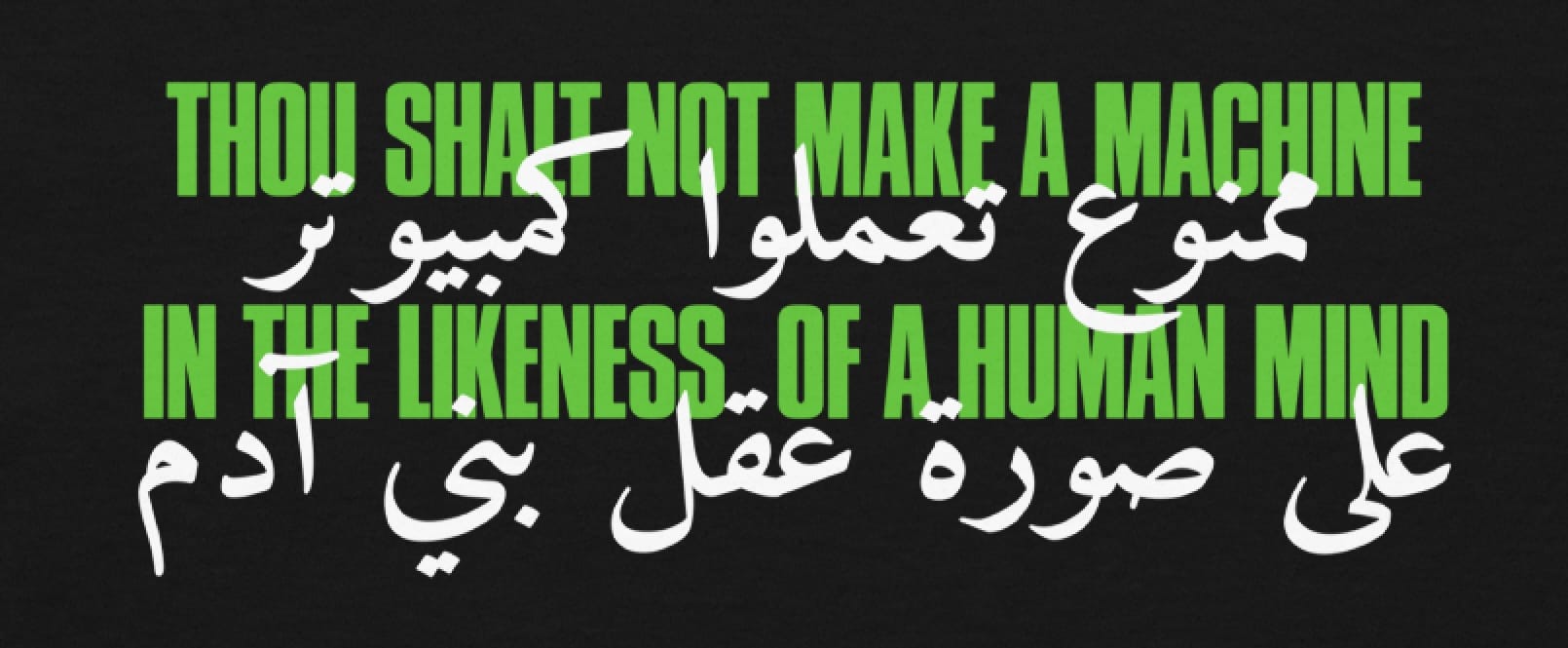
The document lays out one of the foundational principles that shape its ethical doctrine for AI - that humans are the image of the Christian God.
"At the heart of the Christian understanding of the human person lies the great biblical affirmation that men and women are created in the image and likeness of the Triune God."
And that pretending that machines possess this quality is a corruption of this image.
"The artificial imitation of positive human communication — words of advice, empathy, friendship and even love... can be misleading, creating the illusion of a relationship with a real personal subject. When words are simulated, they do not build genuine relationships, but only their appearance"
One and a half millennia before this document, St. Augustine put out a really interesting theory around images and replicas. The theory in medieval times was that the devil was the "ape of God". It goes something like this:
God is the ultimate creator.
Satan is the only fallen angel.
Hence he does not have the power to truly create.
Everything he does is a (corrupted) copy of what God does. And this copy is designed to fool humans.
So if humans are an image of God, all Satan can do is mirror it. So...warnings about a mirrored consciousness. Where have I heard this before?
This is less about...'oh they predicted our paradoxes of 2026', and more that we have wrestled with what is human and what is not for a long time. Many philosophers have had similar conjectures. A whole "are we living in a simulation?" vibe.
THE VALLEY DISAPPEARS
I think the strong reactions we are seeing against Gen AI - the part that mirrors human intellect in the most obvious and direct way - stem from our recognition of this. Cognitive scientists and robotics experts have warned about the "uncanny valley" for decades. It's not just seeing the uncanny valley between us and machines; I think it's when we can't see it anymore that we get unnerved. It's when you can't tell the difference between human and AI writing. That's when the valley disappears. Or is shrouded enough that we can't sense it. That's when we get scared of falling into it.
Last year, in his excellent essay on the consciousness of AI, Anil Seth warned us:
"The philosopher Shannon Vallor describes AI as a mirror, reflecting back to us the incident light of our digitized past. We see ourselves in our algorithms, but we also see our algorithms in ourselves. This mechanization of the mind is perhaps the most pernicious near-term consequence of the unseemly rush toward human-like AI"
The rapid development of AI is generating massive interest in consciousness. The world's top AI companies are devoting growing resources to a question many still regard as science fiction: what happens if AI becomes conscious? I wrote about the rise of AI-powered toys a few months ago that raised the same concern.
A few days before the Pope's memo, at the Google I/O stage, Demis Hassabis casually dropped this line:
“We're at the foothills of the singularity."
For a taciturn leader who doesn't engage in too much bombast, this was a big deal. Singularity has the concepts of AGI and consciousness all wrapped up inside it. It also hints at how much attention these companies are paying to the idea of consciousness.
BUT ARE WE ALL MAD?
Rest of World wrote about how the Pope's encyclical opens up a question of whether we like it or not religion already has a big role to play in AI. The implicit bias baked into the data that trains these models gives it a pre-packaged morality. And most of that data comes from a largely Western context, which is majority Christian.
Religion shapes the morality of a society, irrespective of the actual religion (or lack thereof) of people living in that society. If Christianity asserts that humans are the image of God and hence better than the rest of nature, any assault on this special place will hit hard.
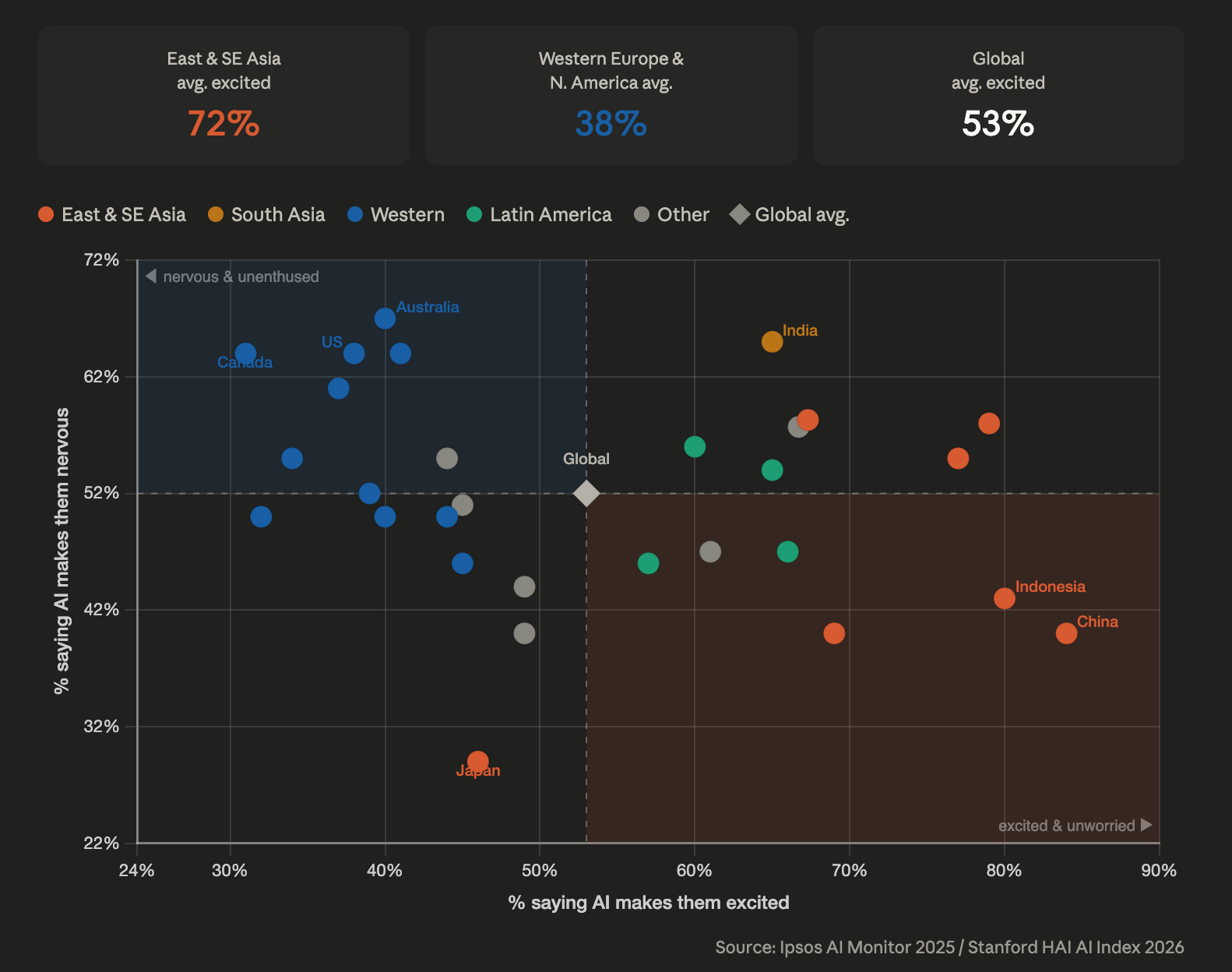
The best snapshot of this underlying view-shaper is to look at attitudes towards AI across the globe. The 2026 Stanford HAI AI Index Report and the 2026 Ipsos AI Monitor both point to this split. The West (the US, UK, and Western Europe) is defined by caution, anxiety, and a desire for strict regulation; the East (particularly China, India, and Southeast Asia) views AI with immense optimism, seeing it as an empowering tool for progress.
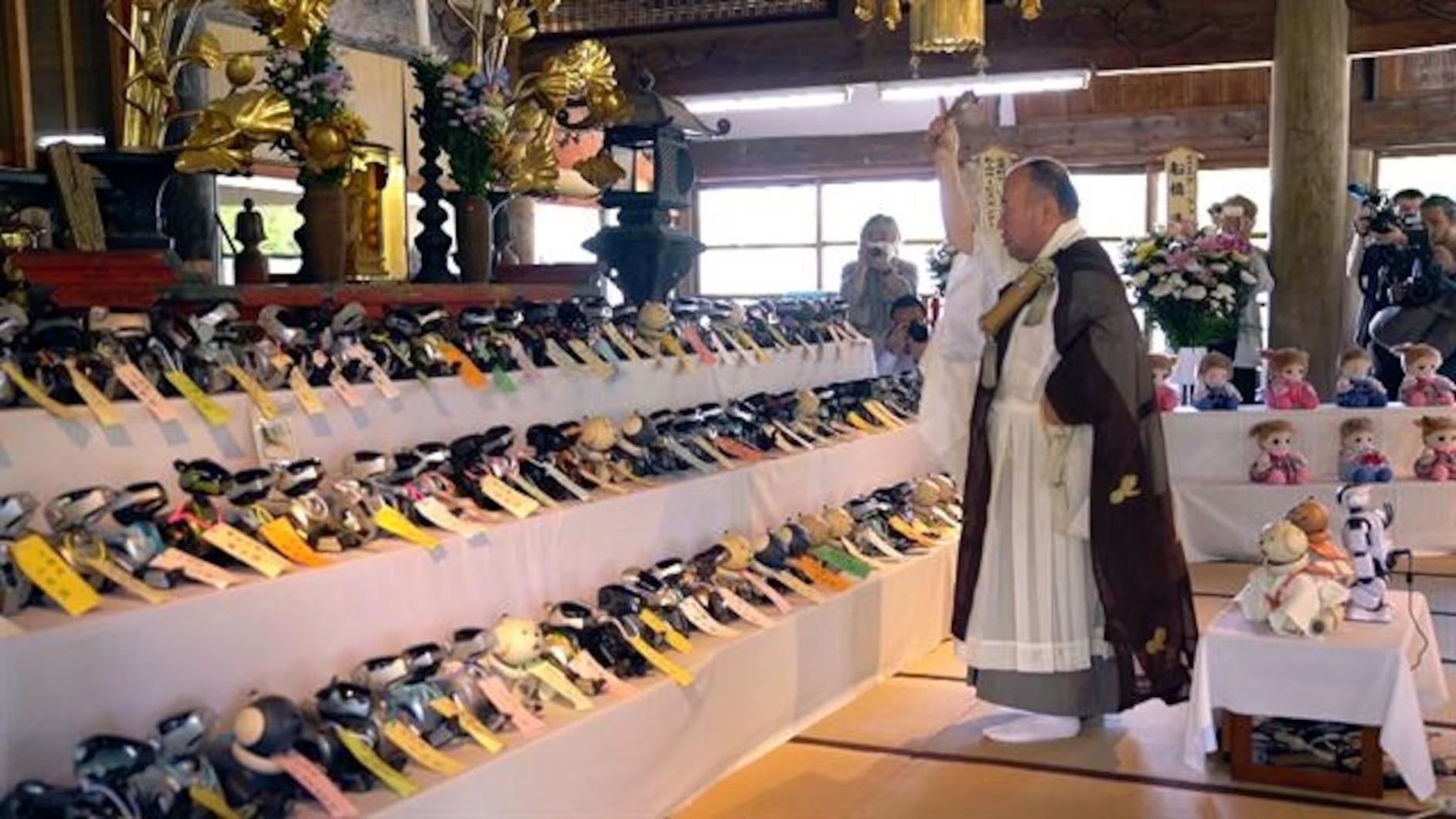
If you walk into any of the incredible Eslite bookstores in Taipei, you'll see volumes of books by Venerable Master Hsing Yun, the founder of the global Fo Guang Shan monastic order. He was (still is through his sermons and books) beloved because he championed a modern take on Buddhism - called 'Humanistic Buddhism'. It's dedicated to integrating spiritual practice into everyday life. One of his theories is that of "nature of insentient beings" - which says that even objects that are non-living carry the Buddha in them. This is common in many East Asian cultures. Those who read my research on AI-enabled toys will remember the idea of kami (or God/Spirit), which claims that even a robo-dog possesses some soul-like object, and hence deserves a funeral. So a machine, including AI, can also attain the status of Buddha. It views AI not as an "evil machine", but more as a mirror that reflects the intentions you put into it.
There is no line to cross, no threshold to separate consciousness from...well..everything else. Which is why I think we're reading the outrage wrong. The outrage against AI isn't universal. Depending on which side of the Pacific you are on, your attitudes towards it change.
LABOR ALL THE WAY DOWN
Like all great economic juggernauts in the West, AI too has been built on the back of exploited black and brown labor.
Despite the exploitative nature of the work - the development of Gen AI has employed millions across Africa and Asia. Thousands of data-labelers, classifiers and moderators working around Africa and South Asia have been behind the illusion of absolute understanding and intelligence. When the Standard Chartered CEO casually called something "lower-value human capital", this is where that capital is already coming from. Yes, it's “low value”, but collectively it has all the value. We shouldn’t be newly mad at the CEO for saying it, we should be mad at ourselves for ever having stopped feeling outraged.
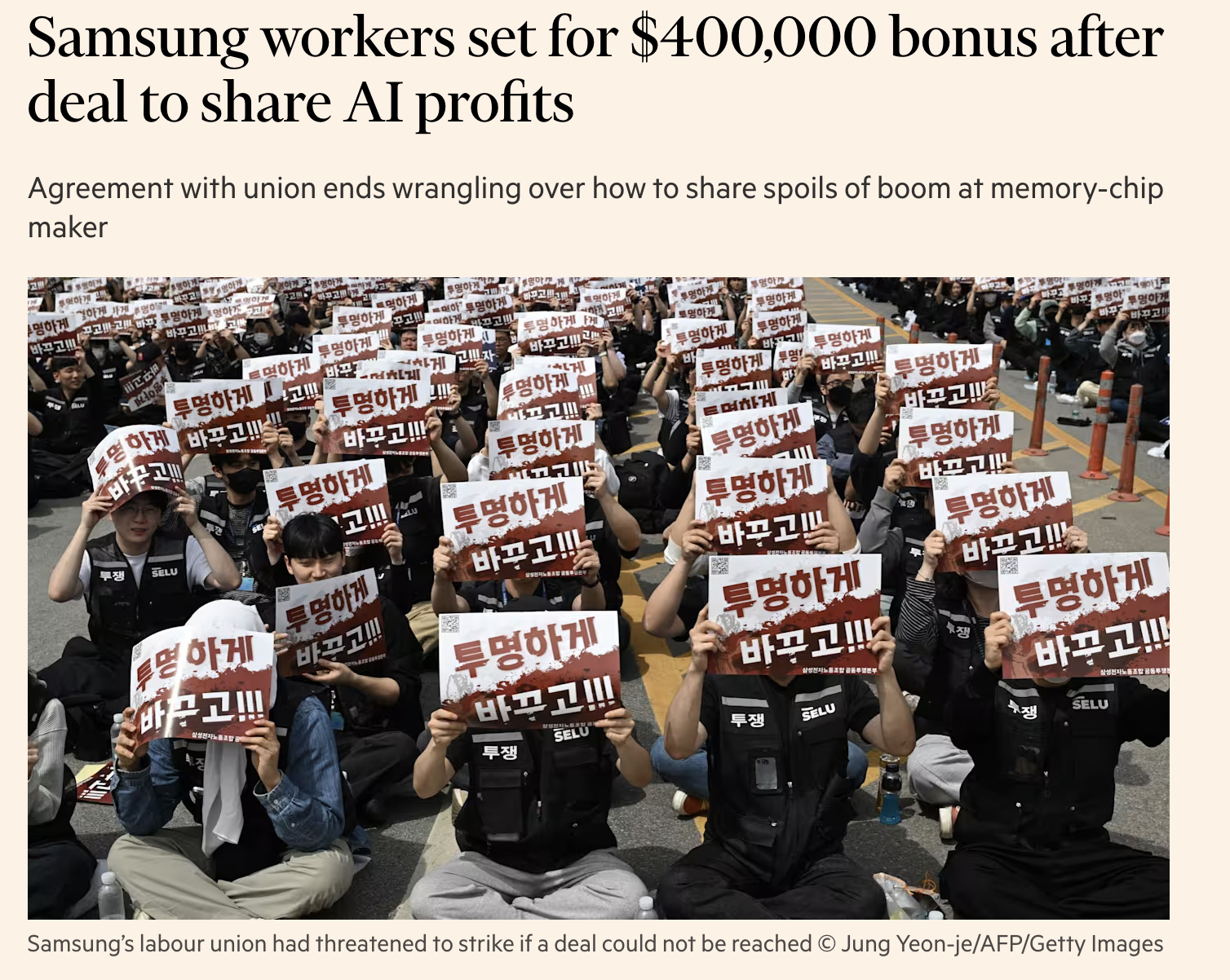
And the physical infrastructure that powers all this too comes from the East Asian supply chain. GPUs, memory and fibre optics are made by labor that can't be abstracted away. The "physical AI" economy is very much driven by Asia.
But these workers aren't anxious about being replaced. Neither are they going to show up in those surveys. These workers are anxious about being blocked out of the AI windfall they are powering.
Employees in South Korea have had to put up a bold and brave fight to get their rightful compensation amidst the incredible returns companies like Samsung and SK Hynix have reaped.
EXTRACTION
This is what I find missing in most of the discourse. The stories of white-collar wipeout and the astronomical market returns have completely blocked out any talk about exploitation further down the value chain.
The encyclical goes deeper on this than the reactions to it would let on:
"It is not enough to invoke efficiency, nor to celebrate the benefits of innovation, if they are built on a chain of exploitation that remains deliberately hidden. If technology promises emancipation, yet produces new forms of global subordination, it stands in contradiction to the fundamental principle of human dignity"
Past popes have provided guidance on social and ethical concerns - in fact this encyclical was released on the anniversary of Rerum Novarum, which in 1891 addressed the exploitative nature of capitalism.
[And famously, capitalism did a full 180 after reading that and stopped capitaling after that. jk jk]
The ethical debate is too binary because it's framed entirely through a Western lens. The booing of commencement speakers who venerate AI and applauding the Pope for warning against are both performances. There's no consideration for the thousands of African and Asian workers making a living building this mirror. It's the same refusal to deal with complexity that we saw with fast fashion. People boo Shein but don't bat an eye at H&M. They're horrified by factory conditions in Bangladesh but won't acknowledge that those factories provided employment that wasn't coming from anywhere else. The internet continues to be the natural predator of nuance.
THE MIRROR MASTERS
The outrage against AI masks what we are really mad about - which is the extractive system that lies underneath this. AI is this mirror. It's sucking up all the corpus of knowledge that we have put out there and then showing it right back to us. But then the warped image threatens half the world's own sense of self and work. And for the other half, it's not being paid enough by the mirror master. The mirror isn't the problem, it's who owns it. And what they're charging for you to look at it and what you're not charging them to make it. We're all voting with our tokens while decrying the loss of the human soul.
In this clip The Verge editor David Pierce captures not just the scary mirror-ness of AI, but also how much power over us this represents.


Unprecedented power and profits being bestowed on a very small group of people should be held accountable. The extractive system behind all this has been building up for decades. But unlike the Pope, looks like we would rather not engage with that nuance.
I always think of this line in Oscar Wilde's preface to The Picture of Dorian Gray.
"The nineteenth century dislike of Realism is the rage of Caliban seeing his own face in a glass. The nineteenth century dislike of Romanticism is the rage of Caliban not seeing his own face in a glass.”
There is some of that rage of Caliban in our reaction too. No one wants their lives and livelihoods usurped by a lesser version of themselves. Yet no one wants to accept that the extractive system that powers that version was something they were complicit in forming.
Our rage isn't because we like or dislike what we see in the mirror. It's that we hate being asked to look at all.
POPE IS BACK, BACK AGAIN
It is just a matter of time before people come to terms with the mirror, the ugliness, the spuriousness of it all. Just the way they did with Social Media. Social Media's insidious effects were seen in Asia first. Few may remember Facebook's role in the Rohingya massacre in Myanmar. A decade later, there is global consensus on the insidious effect it has had on society.
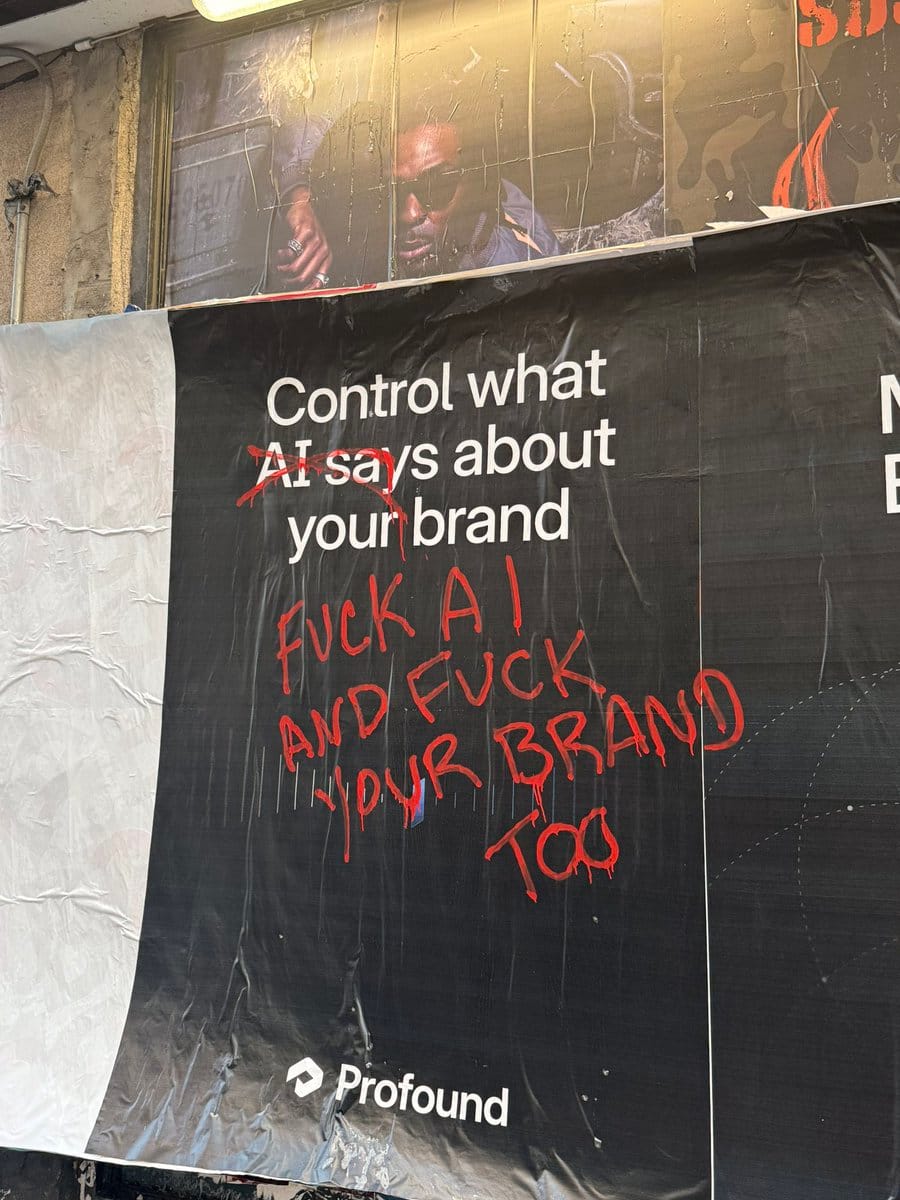
These things take time. And I'm glad we have a whole generation in the West is questioning this. I'm glad workers on the frontline of AI in the East are putting up a brave fight for their rightful compensation. I know we will see more of this. People whose lives and livelihoods are shaped by this have skin in the game to get this right. And in the first American Pope, both groups have found an ally. The reaction to the papal encyclical tells us that Pope Leo has managed to connect with the younger generation in a way politicians all over the world have failed to. He's shown them, with nuance and conviction, how to question the mirror master.